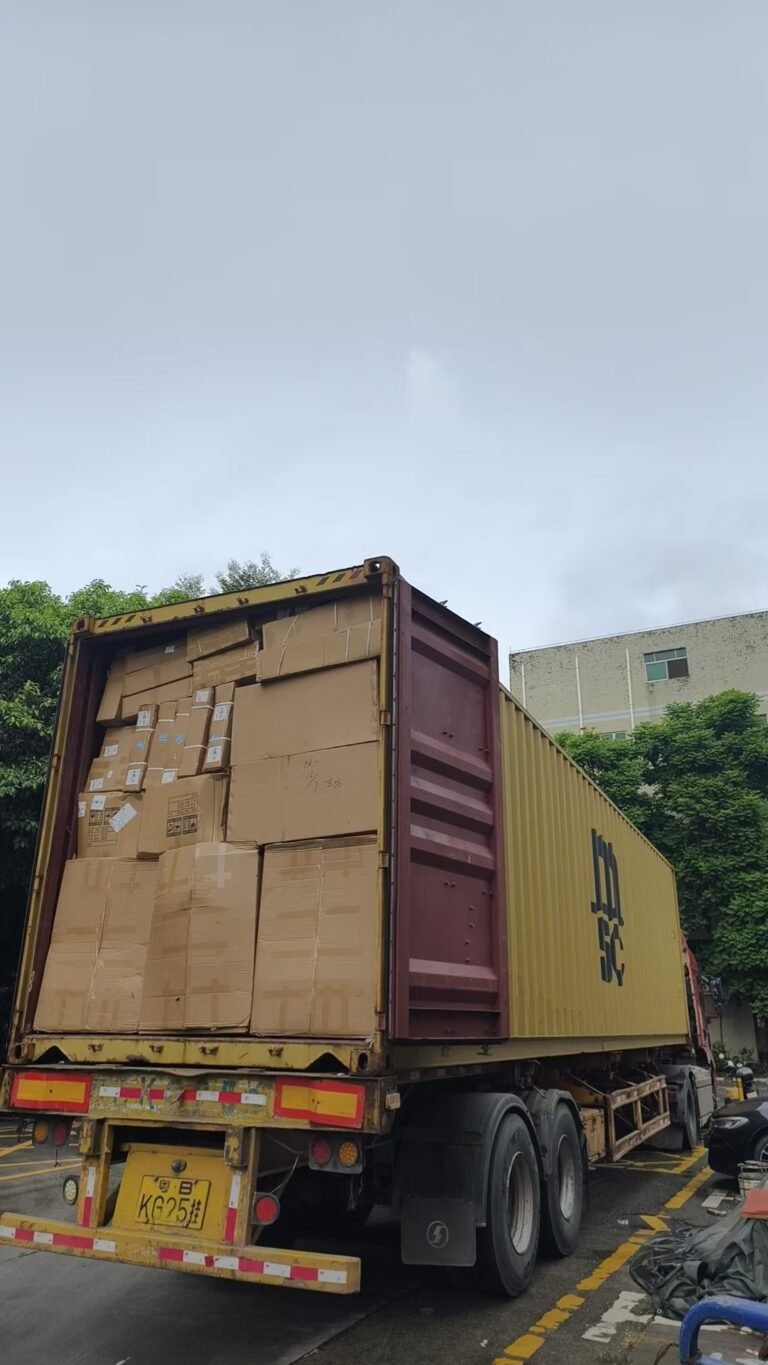

Shipping from China to Canada looks manageable on paper — Vancouver is close, rates are reasonable, and the process seems straightforward. Then your container arrives, and you discover that Canada’s customs system changed while you weren’t looking.
I learned this the hard way with my first Canadian client. He ran a home-goods business in Toronto, sourcing from Foshan and Ningbo. We had done two successful sea shipments to Vancouver, and everything was smooth. Then in early 2026, I sent a 40HQ container of furniture and textiles. I thought it would be routine.
It wasn’t. The container sat at the Port of Vancouver for nine days. Not because of a tariff issue — because the importer of record wasn’t properly registered on CARM, Canada’s new customs portal. My client hadn’t set it up, and I hadn’t checked. Storage fees: CAD $1,100. His message was short: “I thought you knew how Canada works.”
I fixed it. But that call changed how I ship to Canada. Since then, I’ve handled two long-term Canadian clients across sea, rail, and express — and I’ve learned exactly where the pitfalls are. Here’s what I wish I’d known from day one.
Client One: The Toronto Home-Goods Importer
My first Canadian client — the one who got hit with the CARM issue — imports furniture and textiles from Guangdong and Zhejiang. His orders are bulky and not urgent, so sea freight is the only viable option.
China to Canada sea freight cost for a 40HQ container to Vancouver runs roughly $3,500 to $5,500 USD in 2026, with transit times of 14–22 days port-to-port. But his final destination was Toronto, which means rail intermodal from Vancouver adds $1,000 to $1,700 and 5–7 days to the total cost and timeline. A 40HQ to Toronto via rail lands around $4,500 to $7,200, with door-to-door times of 22–35 days.
Here’s what the quotes don’t tell you: Vancouver is congested. Average container dwell times at the Centerm facility climbed from 4.3 days in December to 7.3 days in March, and at peak, outbound rail dwell times reached 20–30 days due to rail car shortages. If your paperwork isn’t clean before arrival, you’re adding days of storage fees on top of an already stretched timeline.
The lesson for sea freight to Canada: Vancouver is fast on the ocean leg, but the rail connection to Eastern Canada is where shipments go to die. Build buffer time into your planning, and make sure your customs documentation is ready before the vessel arrives.
Client Two: The Cosmetics Brand That Used Everything
My second Canadian client is a skincare brand based in Montreal. They source packaging components and finished goods from Guangzhou and Shenzhen. Over the past year, we’ve used sea, rail, air, and express depending on urgency and volume.
Sea Freight: The Workhorse (With a Rail Problem)
For bulk packaging — glass bottles, pumps, and cartons — sea freight is the only option. A 40HQ from Shenzhen to Montreal runs roughly $5,500 to $6,800, with transit times of 28–35 days. Montreal is an East Coast port, so the vessel routes through the Atlantic rather than the Pacific, which avoids the Vancouver rail bottleneck entirely.
But the trade-off is schedule frequency. West Coast services are more frequent, and rates are generally lower. For my Montreal client, the stability of a direct East Coast call was worth the slightly higher freight cost.
Rail Freight: The Overland Option (Domestically, Not Internationally)
Canada doesn’t have a direct China-Europe-style rail link from China. What it does have is a massive domestic rail network — CN and CPKC — that moves containers from Vancouver to Toronto and Montreal. That’s the “rail leg” that adds 5–7 days and $1,000+ to your cost.
When my Montreal client needs something faster than sea but cheaper than air, we route through Vancouver and then rail to Montreal. It’s not a separate transport mode — it’s an extension of the sea freight journey. The customs process happens at the port of entry (Vancouver), then the goods move inland under bond or with duties paid.
Air Freight: The Emergency Button
For sample batches or urgent restocks, China to Canada air freight runs $5.50–$9.50 per kg for shipments over 100kg, with transit times of 5–8 days door-to-door. Express courier (DHL/UPS) can do 3–5 days at higher rates. For a product launch where missing the retail window costs more than the freight premium, air is the right call.
Express Courier: Samples and Small Batches
For small parcels under 50kg, DHL and UPS handle customs clearance and deliver in 3–7 days. But here’s the catch: Canada’s de minimis threshold is only CAD $20 for goods from China. Almost every express shipment will trigger GST, and many will trigger duty. The carrier will collect these charges on delivery — plus a handling fee. That’s why DDP is almost mandatory for direct-to-consumer.
Shipping Methods Compared: Air vs Sea vs Rail vs Express
| Method | Transit Time (Door-to-Door) | Cost Range | Best For |
|---|---|---|---|
| Air Freight | 5–8 days | $5.50–$9.50/kg | Urgent, high-value, 100–500 kg |
| Sea Freight (FCL to Vancouver) | 14–22 days + inland | $3,500–$5,500/40HQ | 15+ CBM, West Coast delivery |
| Sea Freight (FCL to Toronto via rail) | 22–35 days | $4,500–$7,200/40HQ | Eastern Canada, bulk orders |
| Sea Freight (FCL to Montreal) | 28–35 days | $5,500–$6,800/40HQ | East Coast, direct call |
| Sea Freight (LCL) | 20–40 days | $110–$170/CBM | 1–13 CBM, cost-sensitive |
| Express (DHL/UPS) | 3–5 days | $6–$12/kg | Samples, urgent small batches |
The CARM System: The 2026 Rule That Changed Everything
Here’s the thing that matters more than freight rates for Canadian importers in 2026: CARM.
The CBSA Assessment and Revenue Management system is now mandatory for all commercial importers. As of 2026, every importer must be registered on the CARM Client Portal, and must delegate authority to their customs broker or freight forwarder inside the portal. If you skip the delegation step, your broker cannot file customs entries on your behalf, and your cargo will not be released.
What you need to register:
- A Business Number (BN15) — a 15-digit CRA-issued number with an RM0001 suffix for import-export
- CARM Client Portal registration — and explicit delegation to your broker
- Financial security (RPP bond) on file to get shipment release before paying duties and taxes
If you’re an overseas seller without a Canadian-registered business, DDP shipping services can act as Importer-of-Record (IOR) for you, handling CARM administrative work so you don’t need to set up your own BN15 and bond. But if you want to recover GST and control your own import record, you need to register yourself.
The lesson: CARM isn’t a “nice to have.” It’s the price of admission. If your forwarder doesn’t ask about your CARM status before booking, find one who does.
The CAD $20 Reality: Why DDP Is Almost Mandatory
Canada’s de minimis threshold for goods from China is CAD $20. That’s not a typo. Twenty Canadian dollars.
Above that threshold, you pay 5% federal GST, plus provincial sales tax in some provinces, plus customs duty based on HS code. The higher thresholds you may have read about — CAD $40 for tax-free and CAD $150 for duty-free — apply only to goods from the US and Mexico under CUSMA. China doesn’t get them.
For practical purposes, assume every commercial shipment from China above CAD $20 carries tax and possibly duty. Ship DAP and leave the customer to pay at the door, and the courier adds its own handling fee — producing refused deliveries and complaints. Ship DDP and the duty, GST, and any provincial tax are calculated and prepaid, so your customer gets one all-in price.
For B2B importers, DDP isn’t just convenient — it’s a competitive advantage. Your Canadian buyer doesn’t want a surprise customs bill. Your landed cost needs to be predictable.
The Anti-Dumping Trap: Don’t Assume Your Product Is Safe
Canada has 59 active anti-dumping measures covering products from 35 countries. For Chinese goods, the penalties can be brutal.
Aluminum extrusions from China carry an anti-dumping rate of 101% plus a countervailing duty of 15.84 CNY per kilogram, on top of regular MFN duties and the 25% steel/aluminum surtax. On a 20-tonne shipment, that’s roughly CAD $50,000 in SIMA duties alone before GST.
Other active measures cover cold-rolled steel, corrosion-resistant steel sheet, steel plate, and carbon steel welded pipe. If your product falls into one of these categories and you didn’t know, you’re either overpaying duty (best case) or facing penalties and retroactive collection on audit (worst case).
Before you ship, check the CBSA Measures in Force database to confirm whether your product is subject to SIMA duties. A forwarder who doesn’t flag this isn’t doing their job.
What Actually Matters When Choosing a Forwarder for Canada
After two clients and one CARM disaster, here’s my shortlist:
Do they know CARM? Canada’s customs system is not the same as the US or EU. A forwarder who handles Canada regularly will confirm your CARM registration and delegation before booking.
Can they provide a DDP quote? DDP shipping to Canada door to door means one price covering freight, customs, duty, GST, and delivery. For importers without a Canadian entity, DDP is often the simplest path. If you’re also importing to other markets, the same principles apply — see our Germany shipping experience for a comparison of how customs works in a different market.
Do they understand the CAD $20 de minimis? If they quote you a DDU rate and say “the customer will handle it,” ask how much the customer will actually pay. The answer might surprise you — and your customer.
Do they know Vancouver congestion? The Port of Vancouver’s rail dwell times have been running at 7+ days and sometimes 20–30 days during peak periods. A forwarder who doesn’t plan for this will give you an optimistic transit time that doesn’t hold.
Will they put everything in writing? Verbal assurances about “handling everything” are worthless when CBSA is holding your goods. Get the scope of work in writing — especially around CARM registration, DDP scope, and SIMA duty checks. If you also source from platforms like Taobao, the same care applies to ensuring correct product descriptions and values — see our Taobao shipping to US guide for a parallel example.
Frequently Asked Questions
Q: Do I need a Canadian business number to import from China?
Yes, if you’re the importer of record. You need a BN15 (CRA Business Number with RM0001 suffix) and CARM Client Portal registration. DDP services can act as IOR for you, but you lose control over your import record and GST recovery.
Q: What is CARM?
CARM is Canada’s CBSA Assessment and Revenue Management system. It replaced the old customs payment process and is now mandatory for all commercial importers. You must register and delegate authority to your broker inside the portal.
Q: How much is GST on imports to Canada?
The federal GST is 5%, calculated on the customs value plus duty. Some provinces add provincial sales tax on top. Canada’s de minimis threshold for goods from China is only CAD $20, so almost every commercial shipment triggers GST.
Q: What is the cheapest way to ship from China to Canada?
Sea freight LCL is the most cost-effective for shipments under 13 CBM. For larger volumes, FCL containers offer better per-unit rates. Vancouver is faster than Toronto or Montreal because it avoids the rail leg.
Q: How long does sea freight take from China to Canada?
Vancouver: 14–22 days. Toronto (via rail): 22–35 days. Montreal: 28–35 days door-to-door. Add buffer time for Vancouver rail congestion.
Q: What is DDP shipping to Canada?
DDP (Delivered Duty Paid) means your freight forwarder handles customs clearance, duty, GST, and delivery. You pay one all-in price with no surprise fees for your buyer.
Q: Can my product be subject to anti-dumping duties?
Yes. Canada has 59 active SIMA measures, including steel and aluminum products with rates as high as 101% plus countervailing duties. Check the CBSA Measures in Force database before shipping.
Q: Why is Vancouver port so congested?
Rail car shortages and a surge in imports have pushed container dwell times to 7+ days at Centerm, with outbound rail dwell times reaching 20–30 days during peak periods. The congestion is a rail problem, not a vessel problem.
If You’re Shipping to Canada for the First Time
Here’s the short version from someone who learned the hard way:
- Register for CARM before your first shipment. Without it, your goods won’t clear.
- Understand the CAD $20 de minimis. Almost every shipment triggers GST and duty. DDP is almost mandatory for predictable landed cost.
- Check SIMA measures before you ship. Anti-dumping duties can multiply your cost overnight.
- Build in buffer time for Vancouver. Rail congestion can add a week or more to your transit time.
- Work with a forwarder who knows Canada. The CARM system, the de minimis threshold, and the SIMA list are all Canada-specific. Generic “North America” experience isn’t enough.
We ship from China to Canada regularly — Vancouver, Toronto, Montreal, and everywhere in between. Two Canadian clients have trusted us for over a year now, using sea, rail, and express depending on what each shipment needs. If you want a quote that actually tells you the full landed cost — CARM included, no surprises — we’re happy to put one together.
📦 Get your free quote now and let’s see if we’re a good fit.
Disclaimer: This is a personal account based on my own import experience. Rules and rates change — always verify current requirements with your forwarder before shipping.