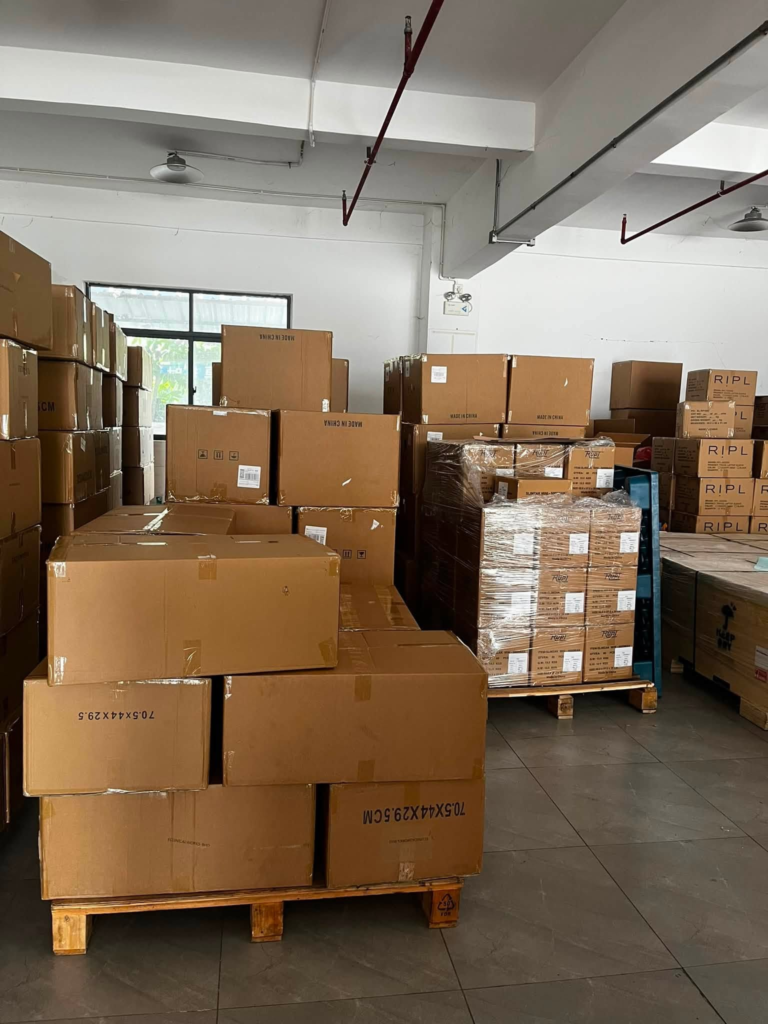

White customs is no longer optional in Russia. Since SPOT tracking became mandatory in 2026, roughly 600 trucks a week are turned back at the border — not because the cargo is illegal, but because the documents don‘t match the system. Gray imports are effectively dead, and Ozon and Wildberries now require white customs documentation before goods can be listed.
If you are importing from China to Russia and still relying on under-declared values or a “flexible” clearance route, the risk is no longer just a fine. It is seizure, delisting, and a customs record that follows your business.
Here is what white clearance actually requires in 2026, what it costs, and how to choose the right transport mode without getting stuck at the border.
The 2026 Rule That Changed Everything: SPOT and White Customs
White customs (белая таможня) means the goods enter Russia through a fully legal declaration: real transaction value, correct HS code, full duty and VAT paid, and a customs declaration (ГТД) issued in your name or your importer’s name.
The SPOT system (Система отслеживания происхождения товаров) tracks goods from origin to destination across the EAEU. It links the import declaration, the seller, the buyer, and the marketplace listing. If the value declared at customs does not match the price on your marketplace storefront, the system flags it.
What this means for you as an importer: the days of declaring $200 for a shipment worth $20,000 are over. The system does not need a physical inspection to catch it — the data mismatch is enough.
The 600 Trucks a Week That Never Cross
Since SPOT went mandatory in June 2026, roughly 600 trucks per week are turned back at the Russian border — not because the cargo is illegal, but because the QR code data doesn‘t match the documents.
The most common mismatch is the packing list. A generic description like “general cargo” or “mixed goods” gives the system nothing to verify, and the truck is sent back. The second most common is the invoice value not matching the marketplace listing price.
For a Chinese shipper, this means the invoice and packing list you issue now directly determine whether the truck crosses or turns around. The return itself isn’t a fine — but it eats the delivery window, and the truck sits at the border while your buyer in Moscow waits.
White customs is now the only legally compliant way to import into Russia. It is also the only way to recover VAT and sell legally on Ozon and Wildberries at scale.
Shipping Options from China to Russia: Real 2026 Timelines and Costs
Russia is landlocked for practical purposes — most cargo moves by rail or truck through Kazakhstan or the Far East. The mode you choose depends on urgency, volume, and whether you need door-to-door delivery.
🚂 Rail Freight — The Backbone
Rail is the default for regular replenishment and mid-sized batches. The China-Europe Railway Express connects Chinese hubs to Moscow and St. Petersburg, with transit times of 12–25 days depending on origin and destination.
| Route | Transit Time | Cost Reference (2026) | Best For |
|---|---|---|---|
| China → Moscow / St. Petersburg | 18–25 days | ~$100–$260/CBM; 40HQ ~$3,500–$5,500 | Regular restocks, mid-to-large batches |
| China → Novosibirsk (via Khorgos) | 12–16 days | Lower than Moscow | Faster replenishment to Siberia |
| China → Yekaterinburg / Chelyabinsk | 18–26 days | 40HQ ~$3,000–$3,900 | Urals distribution |
What to watch: rail quotes are often station-to-station. They may exclude the final truck delivery, the Russian customs broker fee, and the VAT. Always ask whether the quote is door-to-door DDP or port-to-door.
🚛 Truck (TIR / 卡航) — The Fastest Overland Option
TIR trucking is the fastest land route. It is also the most flexible for door-to-door delivery, because the same vehicle can cross the border and continue to the final warehouse.
| Route | Transit Time | Cost Reference (2026) | Best For |
|---|---|---|---|
| China → Moscow (via Manzhouli / Alashankou) | 10–14 days | ~$130–$280/CBM; 20-ton truck ~$5,000–$8,000 | Urgent, high-value, door-to-door |
| China → Novosibirsk | 7–10 days | ~$3.5–$6.0/kg (LCL) | Fast replenishment to Siberia |
| China → Southern Russia (Krasnodar / Rostov) | 18–28 days | ~$3.5–$6.0/kg (LCL) | Project cargo, platform batches |
TIR‘s advantage is “one declaration, one seal, one truck” — the cargo is not opened at every border unless necessary. That reduces handling damage and shortens transit.
🚢 Sea / Sea-Rail — Cheapest for Bulky Cargo
Sea freight to Russia’s Far East ports (Vladivostok) or Black Sea ports (Novorossiysk) is the cheapest per CBM, but the slowest. Transit is 30–45 days port-to-port, and 40–50 days door-to-door via sea-rail.
One important 2026 warning: container dwell time at Far East ports has risen to roughly 9.6 days due to a shortage of fitting platforms and unloading capacity. If you use sea-rail, build that buffer into your planning.
✈️ Air Freight — Only for Urgent, High-Value Cargo
Air freight to Moscow or St. Petersburg runs 3–7 days, at $3.5–$9/kg for general cargo. Express air can reach $8–$15/kg. Use it for samples, new product launches, or urgent replenishment — not for routine restocks.
White Customs Documentation: What You Actually Need
Missing documents are the number one cause of clearance delays at Russian border points. The list is specific, and the data must match across every document.
| Document | Key Requirement |
|---|---|
| Commercial Invoice | Bilingual (Chinese–Russian) or Russian; real transaction value, unit price, specifications, both parties‘ stamps. No vague descriptions like “general cargo.” |
| Packing List | Exact match to physical cargo: weight, volume, and 10-digit HS code. A generic description is the fastest route to a border return under SPOT. |
| Transport Document (B/L / CMR / Rail Waybill) | Route, seal number, and cargo description must match the declaration. No alterations. |
| EAC Certificate / Declaration | Mandatory for electronics, appliances, machinery, toys, textiles, food-contact materials, and many other categories under EAEU technical regulations. The certificate must be issued by a Russian-recognized body, and the holder must be a Russian or EAEU legal entity. |
| Certificate of Origin | Recommended for high-value goods; can support a 5–10% duty reduction if valid and officially certified. |
| Customs Broker Power of Attorney | Issued by a licensed Russian customs broker, naming the responsible declarant. Without this, the declaration cannot be filed. |
| Brand Authorization | Required for branded goods, especially 3C and apparel, to avoid infringement seizure. |
EAC Certification: Why “We Have a Certificate” Is Not Enough
In 2026, Russian customs runs the EAC certificate number, the holder, the test report, and the customs declaration through the FGIS database automatically. A certificate that exists but doesn‘t match the declaration is treated the same as no certificate at all.
Two things catch importers most often:
- The certificate was issued by a non-Russian body. Since 2026, these are invalid in the Russian system — the goods will be flagged even if the certificate looks legitimate.
- The holder is a Chinese entity. Russian law requires the certificate holder to be a Russian or EAEU legal entity. A Chinese manufacturer can supply the test report and technical file, but the certificate itself must sit with a Russian importer or authorized representative.
If either applies, the goods will sit at the border while you re-certify, and the clock on storage fees starts immediately.
A quick self-check before you ship:
- Is the certificate issued by a body recognized in Russia?
- Is the holder a Russian or EAEU legal entity?
- Does the certificate number match what is declared in the customs declaration?
- Does the test report match the actual product parameters (model, voltage, material)?
- Is the EAC mark and dynamic QR code present on the product or packaging?
If any answer is “no” or “not sure,” the shipment is not ready for white customs — regardless of what the supplier told you.
How Long Does Russian Customs Clearance Actually Take?
Clearance time depends on which channel your declaration is routed to. Giving a single “2–5 days” number is misleading, because the variance is large.
| Channel | Time | Trigger |
|---|---|---|
| Green (automatic release) | 4–12 hours | Low-risk goods, complete documents, good compliance record |
| Yellow (document review) | 1–3 working days | Additional verification required |
| Red (physical inspection) | 3–7 working days | High-risk category, value discrepancy, or random selection |
Documents that are complete and consistent move through green. A generic packing list, a mismatched invoice, or a non-Russian EAC holder pushes the same shipment into yellow or red — and the storage clock starts the moment the container or truck arrives.
DDP vs. Your Own Importer: Which Structure Works for You?
DDP (Delivered Duty Paid) white customs means your freight forwarder handles the entire chain: export clearance in China, transport, Russian import declaration, duty and VAT payment, and final delivery. You receive the goods with a full customs declaration (ГТД) and VAT receipt in hand.
When DDP makes sense: you are a first-time importer, you do not have a Russian legal entity or customs registration, or you want one predictable landed cost without managing a Russian broker.
When you should use your own Russian importer: you already have a Russian entity with a customs registration number (ИНН/КПП) and want to recover VAT directly, or you are selling on Ozon/Wildberries under your own seller account and need the import declaration in your company‘s name.
The cost structure is different. DDP bundles freight, duty (0–20% by HS code), VAT (currently 22%), and clearance into one number. If you import under your own entity, you see each line separately — and you can recover the VAT.
What to Send Us for a Russia Quote
We ship to Russia regularly — Moscow, St. Petersburg, Novosibirsk, Yekaterinburg, and southern Russia. Because white customs depends on the product and the HS code, we need four things before we can quote accurately:
- Product name and category — especially whether it is EAC-regulated (electronics, toys, textiles, food-contact, machinery).
- Approximate weight and volume — kg or CBM, a rough estimate is fine.
- Destination city in Russia — so we can compare rail, TIR, and sea-rail.
- Whether you have a Russian importer entity and EAC certificate — or whether you need DDP with our partner importer.
We will reply within 24 hours with a mode comparison, an all-in DDP number (or a DDP + duty/VAT breakdown if you import under your own entity), and a clear checklist of the documents required for your specific product.
For importers who want a single predictable number, our Russia service is structured as DDP white customs with door-to-door delivery — export clearance, Russian import declaration, duty, VAT, and final delivery included. The customs declaration (ГТД) and VAT payment documents are issued in the importer‘s name, so the goods can be listed on Ozon or Wildberries without a compliance flag.
📦 Send those four things now and let’s get your Russia shipment moving — white customs, no surprises.
Frequently Asked Questions
Q: What is white customs in Russia?
White customs (белая таможня) means the goods enter Russia through a fully legal declaration: real transaction value, correct HS code, full duty and VAT paid, and a customs declaration issued in the importer‘s name. It is the only legally compliant way to import, and the only way to sell on Ozon and Wildberries at scale.
Q: What is the SPOT system and does it apply to my shipment?
SPOT tracks goods from origin to destination across the EAEU and cross-checks the import declaration, invoice, packing list, and marketplace listing. It applies to every commercial import. If the data doesn‘t match, the truck or container is turned back at the border — roughly 600 trucks a week are affected.
Q: Why do trucks get returned at the Russian border?
The most common reason is a generic packing list (“general cargo,” “mixed goods”) that gives the system nothing to verify. The second is an invoice value that doesn‘t match the marketplace listing price. The return is not a fine, but it costs the delivery window and storage time.
Q: Can I use a Chinese-issued EAC certificate?
No. Since 2026, the certificate holder must be a Russian or EAEU legal entity, and the certificate must be issued by a body recognized in Russia. A Chinese manufacturer can provide the test report and technical file, but the certificate itself must sit with a Russian importer or authorized representative.
Q: How long does customs clearance take in Russia?
It depends on the channel: green (automatic release) 4–12 hours, yellow (document review) 1–3 working days, red (physical inspection) 3–7 working days. Complete, consistent documents keep you in green.
Q: What is the difference between DDP and importing under my own Russian entity?
DDP bundles freight, duty, VAT, and clearance into one number and uses the forwarder‘s partner importer. Importing under your own entity means you see each cost line separately and can recover VAT, but you need a Russian legal entity with a customs registration number.
Q: How much is Russian import VAT in 2026?
Currently 22%, calculated on the customs value plus duty. Under DDP, it is included in the all-in number. Under your own entity, it is paid at clearance and recovered on your VAT return.
Q: What if my product is not EAC-regulated?
Not every product requires EAC. But the ones that do — electronics, appliances, toys, textiles, food-contact materials, machinery — are the categories most commonly held at the border. We check the EAEU technical regulation for your HS code before quoting.
Disclaimer: This guide is based on 2026 Russian customs regulations and market rates. Rules and rates change; always verify current requirements with your freight forwarder and Russian customs broker before shipping.