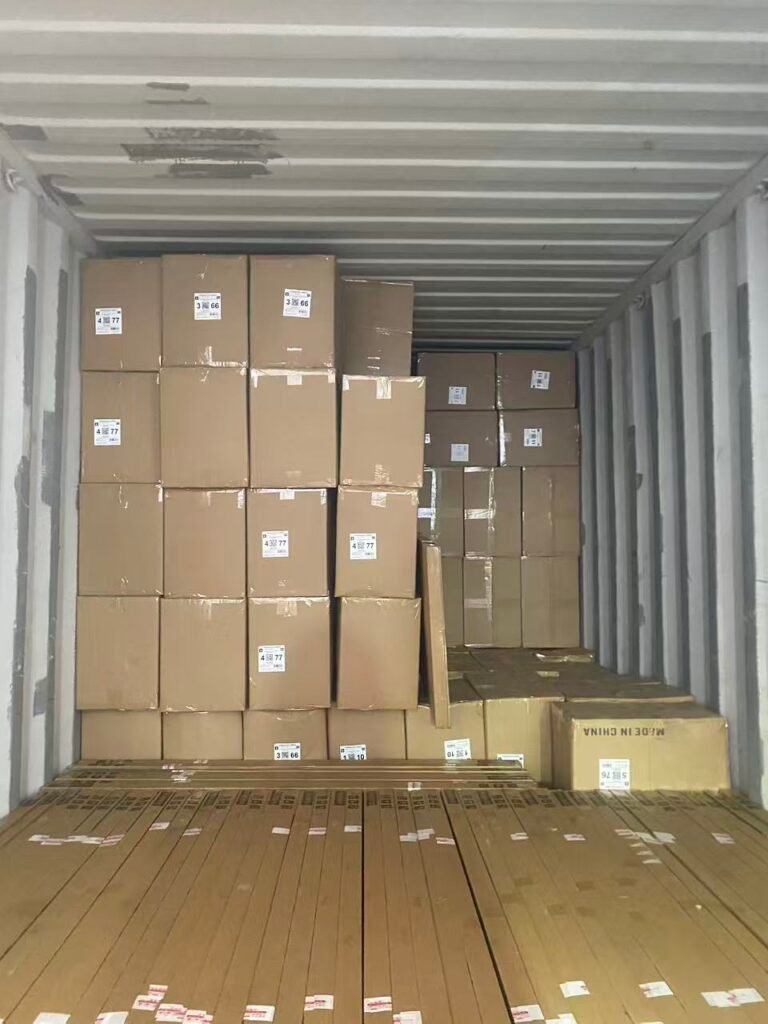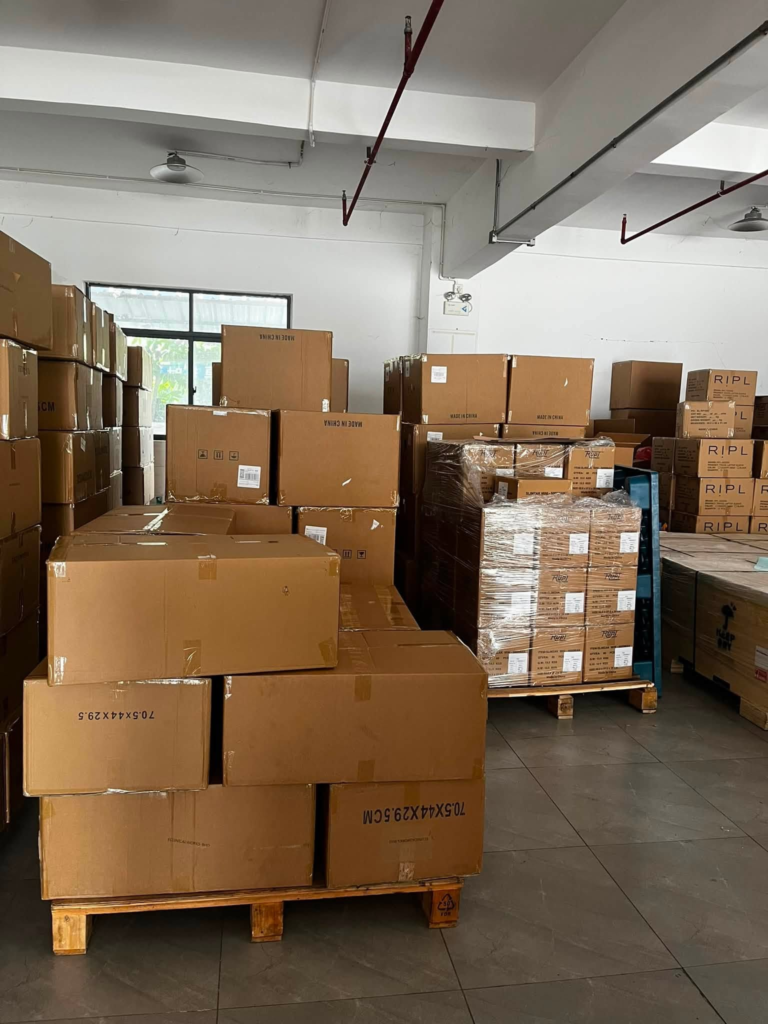

Shipping from China to Poland used to feel like a quiet corner of the EU — manageable paperwork, reasonable ports, and a rail link that actually worked. Then July 1, 2026 arrived, and one line in the customs rulebook made every low-value shipment more expensive.
I found out the hard way with a Polish client who sells small home accessories. We had a steady rhythm: he ordered from two factories in Yiwu, we consolidated in Shenzhen, and shipped by rail to Warsaw. Then in July, his landed cost jumped. Not because freight went up — because the EU abolished the €150 duty exemption, and Poland started charging a flat €3 per tariff line on every low-value consignment.
For his shipment with twelve SKUs, that was an extra €36 before VAT, before freight, before anything else. He didn’t cancel the order. But he asked a fair question: “Why didn’t you warn me?”
I should have. Here’s what I’ve learned since — from two Polish clients, one running rail, the other running sea — about what actually works in 2026, and which long-tail searches actually lead to a landed cost you can trust.
The Rule That Changed the Math (and the Search Terms That Follow)
Poland’s standard VAT is 23%, and it applies from the first euro of import value — there is no VAT-free threshold for commercial goods. Duty depends on the product’s CN code, typically 0–17% for consumer goods, but the new flat-rate charge is what caught everyone off guard.
The €3 per-item duty applies to each separate “product line” in a consignment valued under €150. It’s not per parcel, and it’s not per physical unit — it’s per category of goods declared. Five identical cotton T-shirts count as one product line, so that’s €3. A T-shirt and a watch in the same order count as two lines, so that’s €6.
The practical impact is that consolidation is now a tax decision as much as a freight decision. If you search for “China to Poland consolidation service” or “Poland LCL consolidation low value duty,” you’ll find a dozen forwarders promising to combine your shipments. What they often don’t explain is that combining different tariff lines into one declaration can trigger multiple €3 charges, while combining identical goods keeps the charge low. The only way to manage it is to know your tariff lines before you book.
Client One: The Rail Regular Who Needed Speed
My first Polish client sells small home goods — organisers, kitchen gadgets, phone stands. His volumes are moderate, his margins are thin, and speed matters because he restocks based on weekly sales data.
We use China–Poland rail freight for him. Transit to Malaszewicze — the main EU entry hub for China–Europe trains — runs 14–16 days station-to-station under normal conditions, and some operators quote 10–16 days for the broader China–Poland rail leg. Door-to-door, including pickup, consolidation, and final delivery to Warsaw, lands around 18–22 days.
If you’re comparing modes, the search phrase “China to Poland rail freight vs sea freight transit time” will show you why rail wins for his profile: sea freight to Gdańsk typically runs 34–45 days door-to-port, and the actual door-to-door time is longer. Rail is the sweet spot because it’s faster than sea but materially cheaper than air.
The paperwork side is where rail and sea converge. Whether the goods arrive by train or vessel, Poland requires an EORI number before the first customs declaration. For a Polish-registered company, the format is PL + NIP + 00000; for a foreign entity, it’s PL + 14 digits ending in Z. My client already had his EORI, but if he hadn’t, the shipment would have sat while he registered on the PUESC platform — Poland’s mandatory electronic customs portal. If you’ve ever searched “how to get EORI number Poland for Chinese importer,” you already know this registration is not optional, and it’s not instant for foreign entities.
Client Two: The Sea Freight Importer Who Learned About Article 33a
My second Polish client imports furniture components — bulkier, lower value per cubic metre, and not time-sensitive. Sea freight is the only rational choice.
China to Poland sea freight routes through Gdańsk, the country’s main container gateway. Port congestion at Gdańsk has been running around 8.4 days average dwell time, which is congested by Northern European standards. That doesn’t mean the port is broken — it means your clearance and pickup timing have to account for it. If your documentation isn’t ready when the vessel berths, you’re adding storage days on top of an already slow port.
But the bigger lesson for this client was cash flow. Poland allows VAT-registered importers to defer import VAT through Article 33a — the “postponed accounting” mechanism. Instead of paying 23% VAT at the border, the importer declares it on the VAT return and recovers it simultaneously. For a furniture shipment valued at €30,000, that’s €6,900 that stays in the business rather than sitting with customs for weeks.
Article 33a is not automatic. It requires active VAT registration in Poland, a written notification to both the Customs and Tax Office and the Tax Office at least six days before the first import, and valid certificates confirming no tax or social security arrears. My client had it; many first-time importers don’t, and they feel the cash-flow pinch immediately. If you’re searching “Article 33a VAT deferment Poland requirements” or “Poland import VAT postponed accounting setup,” that six-day notification window is the detail most guides bury.
Shipping Methods Compared: Rail vs Sea vs Air vs Express
| Method | Door-to-Door Transit | Cost Signal | Best For |
|---|---|---|---|
| Rail (to Malaszewicze/Warsaw) | 18–22 days | Mid-range | Time-sensitive, mid-value, 5–25 CBM |
| Sea Freight (FCL to Gdańsk) | 30–40 days | Lowest per CBM | Bulk, low urgency, 15+ CBM |
| Sea Freight (LCL to Gdańsk) | 35–45 days | Moderate per CBM | 1–13 CBM, cost-sensitive |
| Air Freight | 5–8 days | Highest per kg | Urgent, high-value, samples |
| Express (DHL/UPS) | 3–5 days | Premium per kg | Small parcels, urgent restocks |
Neither rail nor sea is “better” in isolation. Rail wins on speed-to-cost ratio for mid-sized shipments; sea wins on absolute cost for volume. The mistake is choosing based on the freight quote alone, without pricing the customs and VAT consequences.
The Documents That Actually Cause Delays
Polish customs (KAS) detains goods for document failures more often than for tariff disputes. The core set is not unusual — commercial invoice, packing list, transport document, certificate of origin where preferential treatment is claimed — but the standards are strict.
The commercial invoice must reflect the transaction accurately, including the customs value used for duty and VAT. The transport document must match the invoice. If a certificate of origin is presented to claim preferential duty, the goods and the document must align precisely. A mismatch doesn’t just slow clearance; it can trigger a formal inspection and storage costs.
For low-value e-commerce consignments, Poland now requires full customs declarations for business shipments, including the company EORI, a detailed goods description, country of origin, and any documents needed for tariff preferences or import restrictions. The informal “small parcel” treatment that some sellers relied on is gone. If your search history includes “Poland customs clearance documents checklist” or “PUESC customs declaration low value shipment,” this is the year those searches actually matter.
What I’d Tell a First-Time Importer to Poland
Know your tariff lines before you consolidate. The €3 per-item charge is triggered by tariff categories, not by parcel count. If you’re importing multiple SKUs, ask your forwarder to model the declaration structure before booking.
Get the EORI before the first shipment. Without it, nothing clears. The PUESC registration is digital, but it is not instant for everyone — foreign entities in particular need the 14-digit format ending in Z.
Ask about Article 33a. If you’re VAT-registered in Poland, deferred accounting can turn a 23% cash hit into a return-line item. If your forwarder doesn’t mention it, ask why.
Plan for Gdańsk dwell time. Eight days is not a crisis, but it is a planning assumption. If your shipment is time-sensitive, rail to Malaszewicze is the faster European entry point.
Do not assume “EU customs” means the same thing everywhere. Poland’s PUESC system, EORI format, and Article 33a mechanism are national. A forwarder who treats Poland as a generic EU destination will miss the specifics — the same way a generic “Europe” approach misses Germany’s ATLAS system or the Netherlands’ Article 23. If you’re comparing markets, our Germany shipping experience and Netherlands shipping experience show how different the national rules can be.
Frequently Asked Questions
Q: Do I need an EORI number to import from China to Poland?
Yes. Poland requires an EORI number before the first customs declaration. Domestic companies use PL + NIP + 00000; foreign entities use PL + 14 digits ending in Z. All applications go through the PUESC platform.
Q: How much is import VAT in Poland?
The standard rate is 23% on most goods, applied from the first euro of import value. VAT is calculated on the customs value (CIF) plus duty. The formula is VAT = (CIF + Duty) × 23%.
Q: What is the €3 per-item duty?
Since July 1, 2026, the EU applies a €3 flat duty per product line on consignments valued under €150. It is a temporary measure running until July 2028, and it applies per tariff category, not per parcel or unit. Five identical T-shirts are one line (€3); a T-shirt and a watch are two lines (€6).
Q: What is Article 33a?
Article 33a is Poland’s postponed accounting mechanism for import VAT. VAT-registered importers can defer the 23% payment to their VAT return instead of paying at the border, improving cash flow significantly. It requires prior notification to customs and tax authorities.
Q: Is rail faster than sea to Poland?
Yes, materially. Rail to Malaszewicze/Warsaw runs 18–22 days door-to-door under normal conditions, versus 34–45 days door-to-port for sea freight to Gdańsk. Rail is more expensive per CBM, but the time saving can justify the premium for mid-value, fast-moving goods.
Q: How long does customs clearance take in Poland?
With complete documentation, clearance can be same-day to a few working days. Incomplete or inconsistent documents are the primary cause of delays, inspections, and storage costs.
Q: What documents do I need to ship from China to Poland?
Commercial invoice, packing list, transport document (rail waybill or bill of lading), certificate of origin if claiming preferential duty, and the importer’s EORI number. Low-value business shipments now require full customs declarations.
If You’re Shipping to Poland This Year
The €3 per-item rule is not the end of the world — but it is the end of the “just book it and sort it out later” approach. Poland rewards importers who know their tariff lines, have their EORI in order, and ask about VAT deferment before the first invoice.
We ship from China to Poland regularly — rail to Malaszewicze, sea to Gdańsk, and door-to-door delivery to Warsaw, Kraków, Wrocław, and beyond. Two Polish clients have trusted us through this year’s rule changes, and we’ve adjusted the declaration modeling for both. If you want a quote that includes the customs and VAT picture — not just the freight number — we’re happy to put one together.
📦 Get your free quote now and let’s see how the numbers actually land.
Disclaimer: This is a personal account based on my own import experience. Rules and rates change — always verify current requirements with your forwarder before shipping.